
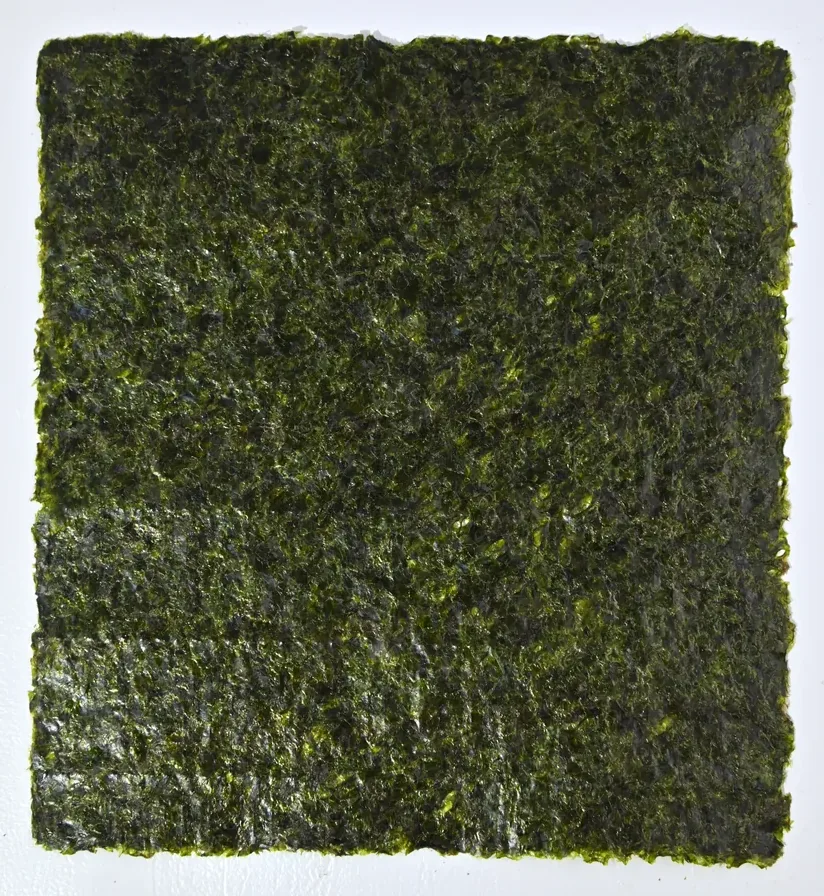
Nori sheet thickness and toasting level should be treated as sample-evaluation points when selecting material for maki rolls. The available product facts identify roasted sushi nori in grades A, B, C, and D, but they do not assign a thickness or toasting specification to any grade. Buyers therefore need to compare candidate samples under the same preparation conditions before defining a purchase specification.
Separate Grade from Physical Specifications
WEIDONGJIA offers roasted sushi nori sheets for sushi, onigiri, and food-service use. The product range includes grades A, B, C, and D, with standard packs of 50 sheets / 140 g and 100 sheets / 280 g. These details identify the available grades and pack formats, but they do not establish a specific thickness or a choice of toasting levels.
For sourcing purposes, buyers should ask the supplier whether thickness and toasting are controlled distinctions among submitted samples. Grade, thickness, and toasting should be recorded as separate fields rather than treated as interchangeable terms. Each test record should also include the exact product, grade, pack format, and supplier sample identifier.
Compare Samples in the Intended Maki Process
A useful comparison keeps preparation variables consistent across all samples. Buyers can use the same maki format, filling arrangement, preparation method, and cutting procedure for every candidate. This allows the evaluation to focus on observed handling and texture without assigning an unsupported cause to the grade name.
Record observations at the stages relevant to the intended operation:
- Sheet handling before assembly
- Behaviour during rolling and cutting
- Surface condition after contact with rice and fillings
- Bite and tearing in the finished maki roll
Use the same evaluation language for every sample and have the relevant purchasing, production, or food-service personnel record their observations. If the roll will be assessed at a defined serving point, the buyer should specify that point in the test method and confirm related requirements directly with the supplier.
Convert Test Results into a Purchase Specification
After comparison, identify the sample that matches the required handling and finished-roll texture. Ask the supplier to confirm in writing which grade and pack format correspond to that sample, together with any available thickness or toasting descriptors. Do not assume that the same grade name automatically defines those physical details unless the supplier states them for the exact item under review.
For private-label projects, Lianyungang Weidongjia Food Co., Ltd. provides OEM / ODM production. Buyers should align the approved sample, grade, standard pack, label requirements, and any agreed physical descriptors before quotation review. The company is audited annually against HACCP and ISO 22000:2018, and buyers can request the relevant audit information during supplier assessment.
To review grades, arrange samples, or request a quotation, use the contact page and provide the intended maki application, preferred standard pack, and required private-label details.